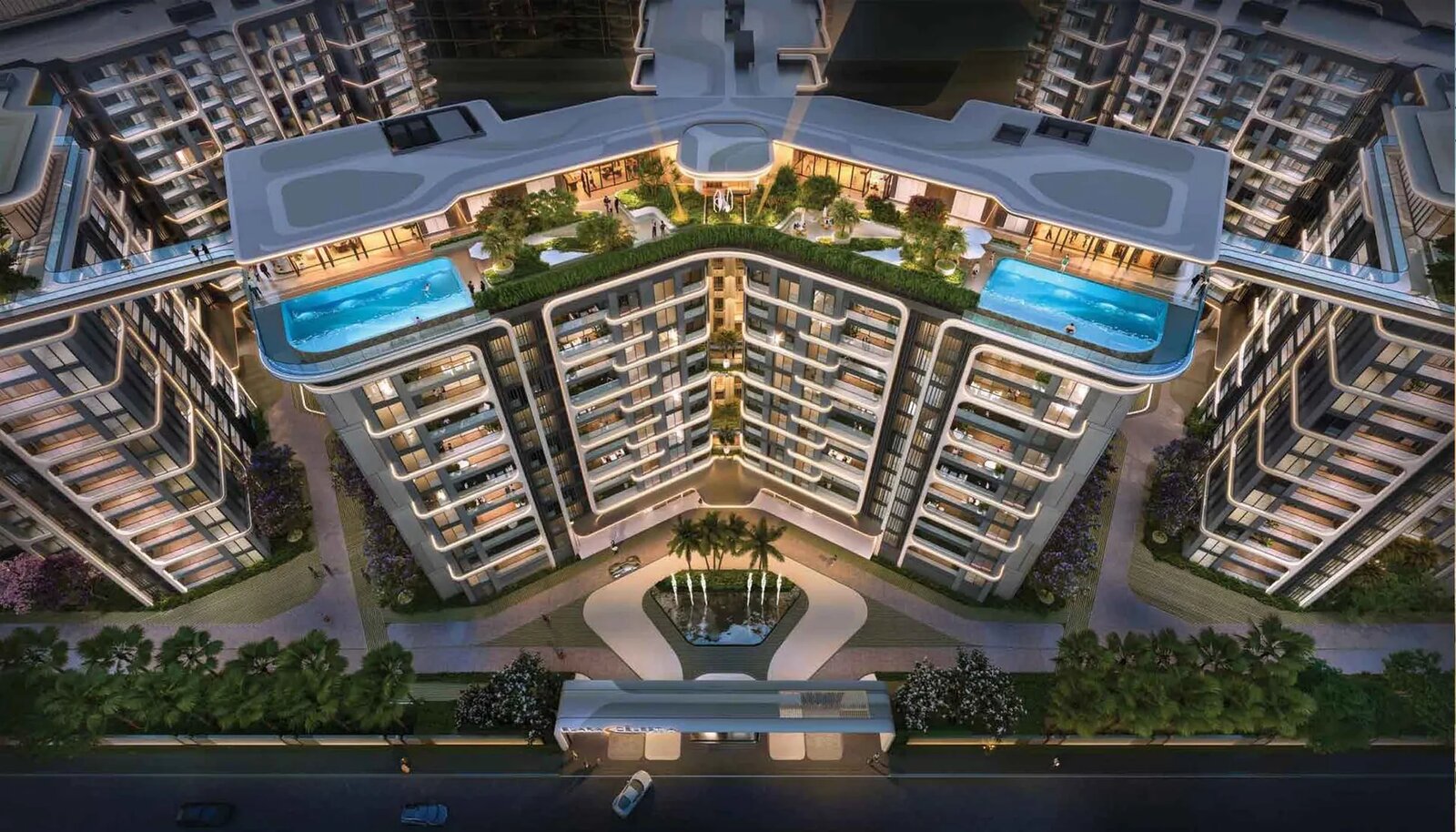
If you're based in the US, UK, Singapore, the Gulf or Australia and looking at L&T Thanisandra, the mechanics of buying are more straightforward than most NRIs assume. The paperwork is well-defined, the loans are available, and the tax structure has settled. What trips most buyers up isn't the law — it's the sequencing.
Here's the honest end-to-end guide, written from what we've seen over multiple NRI buyers across the Thanisandra belt.
The basics — what you can and can't do
NRIs and OCI card holders can purchase residential and commercial property in India freely under FEMA (the Foreign Exchange Management Act). No RBI approval is needed. The only restrictions are on agricultural land, farmhouses and plantation property — none of which apply to L&T Thanisandra.
Payment must be via inward remittance through normal banking channels or from an NRE/NRO/FCNR account. You cannot pay in foreign currency directly.
The POA (Power of Attorney) question
The most common question we get: do I need to fly to India for the booking?
The honest answer: not usually. A notarised and consular-attested Power of Attorney held by a trusted family member (or by us, if you prefer a professional holder) covers the entire booking, agreement signing, registration and handover process. The POA is typically 4-6 pages, costs ₹3,000-8,000 to execute, and takes 2-4 weeks to complete including consular attestation.
The one time you'll ideally be present (or on a video call) is the final handover and snagging walkthrough. That's the step where catching finish issues matters most.
NRI home loans — NRE vs NRO structure
Most NRI buyers at L&T Thanisandra will use a home loan. Pan-India lenders — SBI, HDFC, ICICI, Axis, LIC HFC, Bajaj Finserv — offer NRI home loans up to 80-85% of property value, at rates close to resident-Indian rates (typically within 10-25 bps).
Account structure that works:
- NRE account — your foreign earnings are deposited here tax-free in India. Great for parking salary.
- NRO account — your Indian income (rent, FD interest, dividends) sits here, taxable in India.
- FCNR — foreign currency fixed deposits, for buyers with large foreign-currency holdings they don't want to convert.
For the home loan EMI, most lenders require an NRE or NRO account as the debit account. Set up both before you apply — it simplifies the process significantly.
The EOI refund gotcha
This is the single most common trip-up we see. When you pay the ₹1 lakh EOI, the refund bank account captured on the form must be an NRO or local Indian bank account. Refunds cannot be processed to an NRE account.
If you only hold an NRE account, open an NRO before your EOI. We've covered this in detail in our EOI checklist.
DTAA — avoiding double taxation
The Double Taxation Avoidance Agreement (DTAA) between India and your country of residence ensures rental income and capital gains from Indian property aren't taxed twice. Under most DTAAs:
- Rental income is taxable in India first, with a credit available in your country of residence.
- Capital gains on sale (after 24 months of holding) attract 20% long-term capital gains tax in India, with indexation benefit.
- Short-term capital gains (under 24 months) attract tax at your slab rate.
Our partner CAs typically charge ₹8,000-15,000 for a first-year DTAA structure review. For a ₹4 Cr apartment, that's a small cost for avoiding future headache.
Repatriating the sale proceeds (when you sell)
The RBI permits repatriation of sale proceeds of up to US$1 million per year, provided the original purchase was through inward remittance or NRE/FCNR funds. Documentation (Form 15CA/15CB) is submitted to your authorised dealer bank.
Important: if any portion of the purchase was through NRO funds or rupee loans repaid from Indian income, the repatriation of the corresponding portion is restricted. Plan the purchase mix accordingly — most buyers who intend to repatriate aim to fund the whole purchase (at least 100% of own contribution) from NRE/FCNR.
The four things that trip up most NRI buyers
- EOI refund bank account not being NRO (forcing you to re-execute paperwork mid-process).
- Not having POA ready before booking day (adding 2-4 weeks of delay).
- Buying through the wrong fund mix and limiting repatriation later.
- Skipping DTAA structuring in year one, then paying double tax on year two's rental income.
Call us before you start
We offer end-to-end NRI support for L&T Thanisandra buyers — virtual site walk-through, digital documentation, POA execution guidance, home-loan sanction with correct account structuring, and DTAA tax advisory through partner CAs. Starting conversation: +91 98808 26025 or the NRI Corner.
Want to talk to someone who knows the project? Call +91 98808 26025 or request a callback. We're an authorised channel partner for L&T Thanisandra and can walk you through anything in this post, project-specific.